
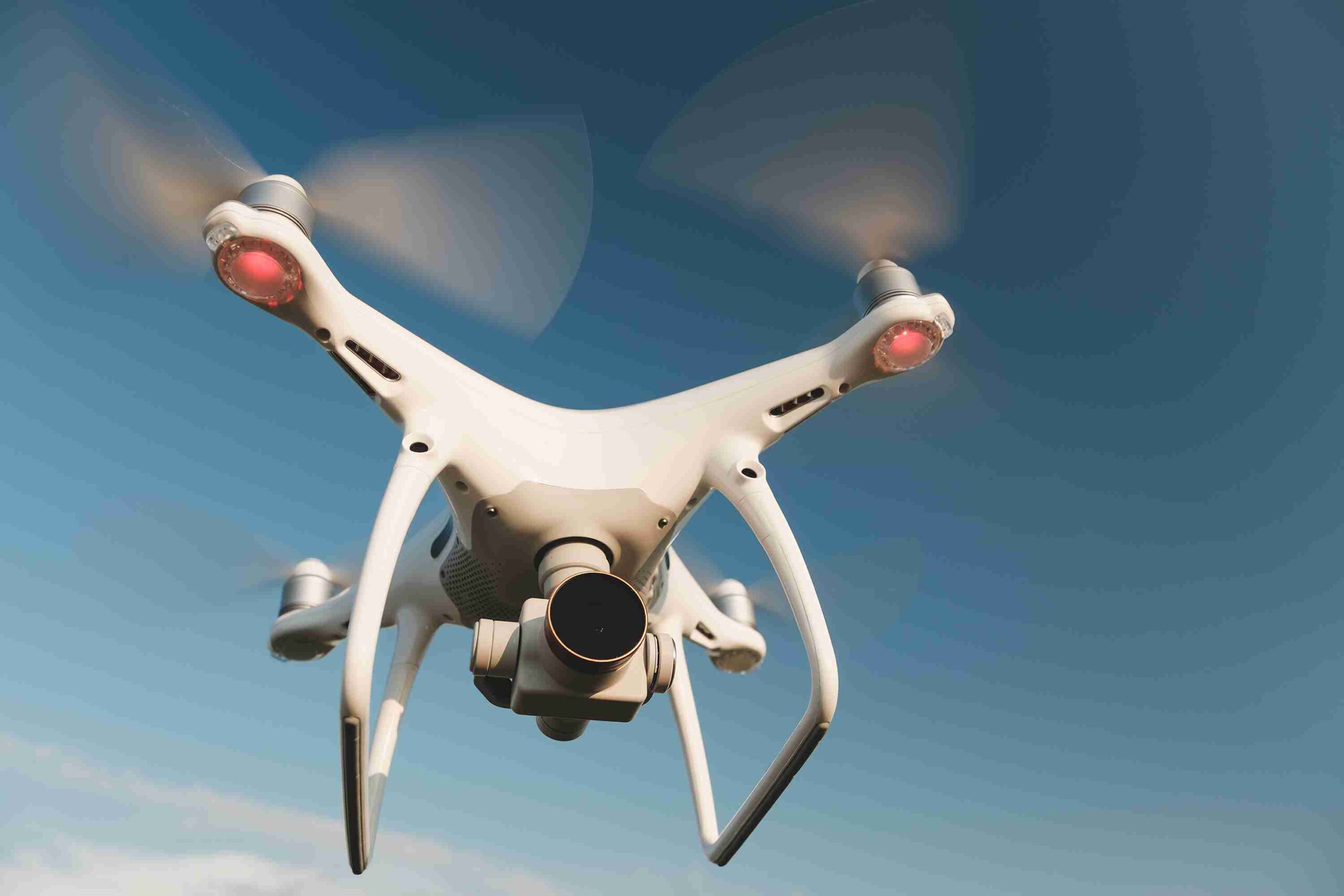
Drone Swarm Technology & Kamikaze Drone Trends, USA 2026
Drone technology has come a long way from simple aerial cameras. In 2026, the conversation around unmanned aircraft in the United States is shifting toward two major themes: drone swarm technology, where multiple drones coordinate and operate as a connected system, and the rise of the kamikaze drone category, which has become a widely discussed part of modern defense planning. Alongside these developments, commercial innovations like the DJI FlyCart 100 and drones equipped with thermal camera technology are quietly transforming logistics, agriculture, and emergency response across the country.
This article takes an informational look at how drone swarm technology and kamikaze drones are evolving in the USA in 2026, and how commercial platforms like the FlyCart 100 and thermal-imaging drones fit into the broader picture.
What Is Drone Swarm Technology?
A drone swarm is a coordinated group of unmanned aircraft that communicate with one another, share data, and work together toward a shared objective — rather than being flown individually by separate operators. Instead of one person controlling one drone, a single operator (or automated system) can oversee dozens or even hundreds of aircraft acting in unison.
The concept borrows from natural systems, similar to how flocks of birds or colonies of insects coordinate movement without a central leader. Engineers have spent years working to replicate that kind of distributed intelligence in machines, and 2026 has become a milestone year for turning that research into practical, real-world systems.
Why Swarm Coordination Matters
A single drone represents one point of failure — lose connectivity or encounter interference, and the mission stops. A coordinated swarm is far more resilient: if some units in the group become unavailable, the rest continue operating and redistribute tasks automatically. This redundancy is a major reason swarm technology has attracted so much research and investment, both in defense and civilian applications, since it makes large-scale operations more reliable and harder to disrupt.
Drone Swarm Technology in the USA: 2026 Overview
The United States has invested heavily in swarm research for years, and 2026 has seen that investment translate into funded programs, testing, and real deployments.
<cite index=”6-1″>DARPA’s Tactical Technology Office released one of its most detailed public requests yet for swarm infrastructure, outlining coordinated groups of up to 500 small and mid-sized aircraft linked to autonomous launch-and-recovery stations designed to operate with minimal continuous human oversight. The request closed in mid-May 2026, coinciding with the formation of a new U.S. Southern Command unit focused on autonomous systems.</cite>
Software development has kept pace with hardware advances. <cite index=”6-1″>Shield AI’s autonomy platform, Hivemind, has become one of the most widely used swarm-coordination systems in the U.S., selected for a Navy program and already integrated into several unmanned aircraft platforms, while Anduril’s Lattice software provides command-and-control across its own product line.</cite>
Government interest extends beyond research contracts. <cite index=”7-1″>In January 2026, the Pentagon launched a challenge offering vendors up to $100 million to develop systems that make it easier for personnel to direct coordinated groups of drones across different domains.</cite>
Swarm technology isn’t limited to military use. <cite index=”8-1″>By May 2026, both government agencies and humanitarian organizations had carried out coordinated drone operations involving anywhere from dozens to hundreds of aircraft, covering tasks ranging from large-scale exercises to disaster response.</cite> <cite index=”8-1″>On the humanitarian side, relief groups used coordinated drone teams to map flood-affected areas in Southeast Asia and earthquake damage in South America, helping deliver supplies and locate people faster than traditional ground-based methods.</cite>
Private companies are also playing a growing role in bringing swarm technology to market. <cite index=”5-1″>Firms such as Swarm Defense Technologies are building American-made drones at scale along with software that allows a single operator to manage large groups of them.</cite> This growing commercial ecosystem is helping accelerate innovation not just for government use, but for industries like agriculture, infrastructure inspection, and logistics as well.
International cooperation is part of this picture too. <cite index=”4-1″>The British Army’s 2026 Warfighting Experiment placed drone swarms at the center of its testing, bringing together personnel from Australia, the UK, and the U.S. under the AUKUS partnership to trial coordinated multi-drone operations.</cite>
Understanding the Kamikaze Drone Category
The term kamikaze drone refers to a category of unmanned aircraft, also known as loitering munitions, that are designed for a single mission: they travel to a designated area, remain airborne while gathering information, and are used once the mission is complete. This is different from reusable surveillance or delivery drones, which are designed for repeated use.
This category gained significant public attention through recent international conflicts, which accelerated research and procurement interest among defense agencies worldwide, including in the United States.
In the U.S., companies like AeroVironment have become established names in this space, producing several generations of loitering munition systems for military use. <cite index=”19-1″>These systems combine features of small reconnaissance drones with precision-guided technology, allowing them to search an area and confirm a target before a mission is completed.</cite> Reporting on recent Army procurement activity shows continued government interest in expanding this category, with newer variants adding features such as improved sensors and extended range.
<cite index=”20-1″>Some newer variants use advanced optical and infrared sensors along with onboard recognition software to help operators identify what they’re looking at, even in low-light or difficult visibility conditions.</cite> This kind of sensor technology overlaps significantly with the broader thermal-imaging trend discussed later in this article.
From an industry standpoint, the growth of this drone category has become a notable part of the broader U.S. unmanned aircraft sector in 2026, with government agencies increasingly treating these systems as standard equipment rather than specialized, rarely used tools.
Where the DJI FlyCart 100 Fits Into the Picture
Not every drone story in 2026 is tied to defense. On the commercial side, the DJI FlyCart 100 has become one of the most talked-about pieces of drone hardware this year, and it shows just how far heavy-lift, autonomous aerial technology has come for everyday industrial use.
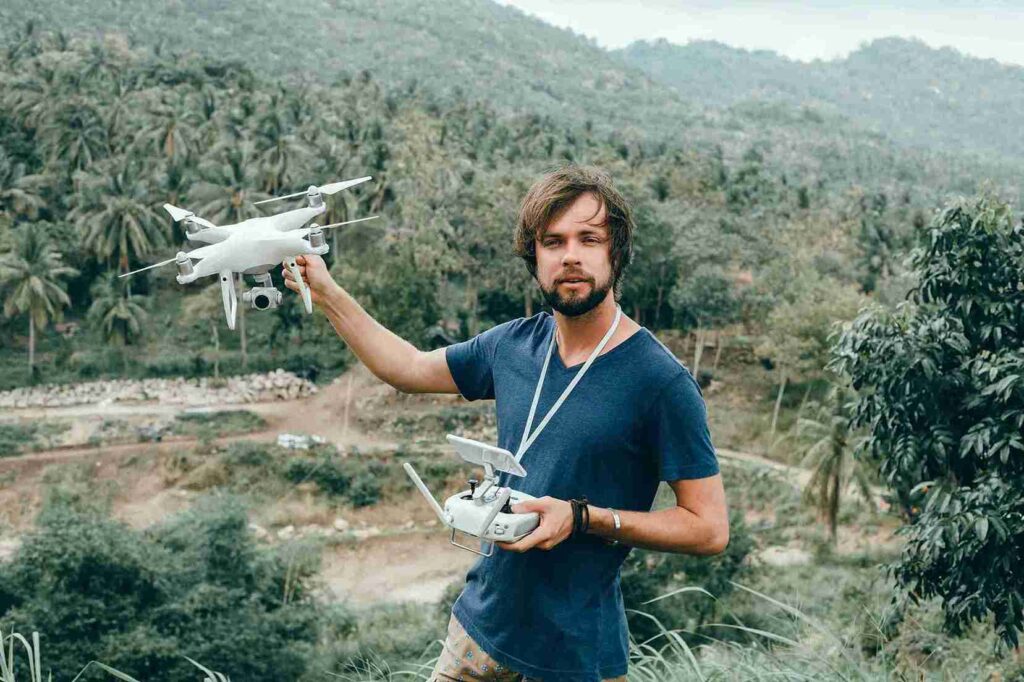
<cite index=”12-1″>DJI introduced the FlyCart 100 as the successor to the FlyCart 30, the drone that made aerial delivery possible even in extremely remote locations like Mount Everest. The new model offers a higher payload capacity, faster charging, and an improved safety system built around LiDAR and multi-sensor obstacle avoidance, along with a dedicated delivery-management app.</cite>
The specifications are impressive for a commercial platform. <cite index=”14-1″>It supports a maximum takeoff weight of 149.9 kilograms and can carry up to 100 kilograms on a single battery, using a multi-rotor design with large carbon fiber propellers for stability. It’s rated to operate at high altitudes and in a wide range of temperatures, with LiDAR, radar, and a multi-directional vision system handling obstacle avoidance.</cite>
Delivery flexibility is one of its standout features. <cite index=”14-1″>It offers two delivery methods — a retractable winch system for drop-offs without landing, and a direct release mechanism — along with hot-swappable batteries for near-continuous operation.</cite> This winch capability is especially valuable for use cases like mountain rescue operations, remote infrastructure maintenance, and emergency medical resupply, where a safe landing spot often isn’t available.
The FlyCart 100 matters in this broader conversation because it demonstrates that autonomous navigation, obstacle avoidance, and long-range connectivity — technologies once mostly associated with research and defense programs — have become commercially viable and are already being used by logistics companies, disaster relief teams, and infrastructure providers across the country.
Drones With Thermal Cameras: A Growing Industry Standard
Alongside swarm coordination and heavy-lift cargo drones, one of the most practical developments in 2026 has been the widespread adoption of thermal imaging across both consumer and professional drone platforms. A drone with thermal camera technology can detect heat signatures that are invisible to a standard optical lens — useful for spotting a person in dense terrain, identifying equipment issues, or monitoring conditions after dark.
Search-and-rescue teams have found thermal drones especially valuable. A missing hiker who’s difficult to spot visually against a forest canopy often stands out clearly on a thermal feed, since body heat contrasts with the cooler surrounding environment. Firefighters use the same technology to identify hotspots inside a structure that may appear extinguished from the outside, helping crews understand where a fire is likely to reignite.
Agriculture is another major growth area for this technology. Farmers and agronomists are using thermal-equipped drones to spot irrigation issues, pest activity, or crop stress before it becomes visible to the naked eye, allowing for earlier intervention and better yields.
Infrastructure and utility companies have also adopted thermal drones for inspecting power lines, solar installations, and industrial equipment, where a small temperature anomaly can indicate a developing problem long before it causes a larger failure. Across nearly every application, thermal imaging has moved from being a specialized add-on to a near-standard feature on professional-grade drones in 2026.
Why 2026 Is a Notable Year for Drone Technology
Taken together, these developments point to a broader shift in how drone technology is being built and used across the United States. Swarm coordination, specialized aircraft categories, heavy-lift commercial platforms, and thermal sensing are all converging into a more connected, more capable unmanned aircraft ecosystem.
<cite index=”6-1″>Market analysts differ on exactly how large the swarm drone segment will become, with estimates ranging from roughly $2.87 billion by 2030 at a 23.5% annual growth rate to considerably faster growth projected by other research firms,</cite> but the overall growth trend is consistent across sources. What’s changed most in 2026 isn’t the long-term forecast — it’s that funding, infrastructure, and real-world programs have caught up with years of research and development.
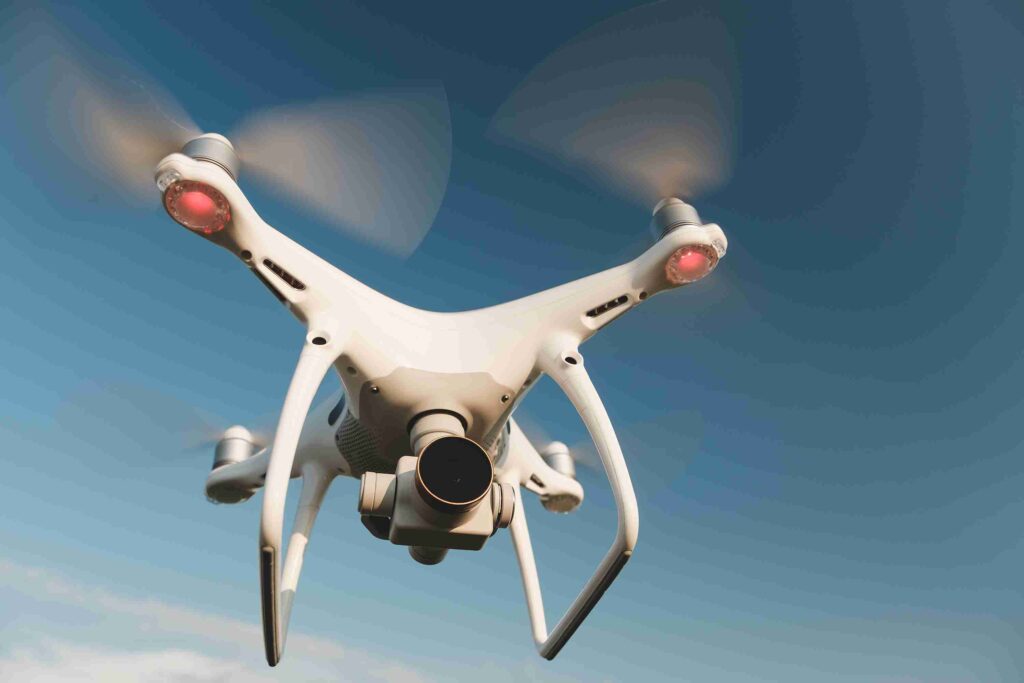
On the commercial side, platforms like the FlyCart 100 show that autonomous, sensor-equipped drones are becoming everyday infrastructure for logistics, agriculture, and emergency response — not just a story confined to specialized industries.
Frequently Asked Questions
What is drone swarm technology? It’s a system where multiple drones communicate and coordinate with each other in real time, sharing data and dividing tasks so they can operate as a connected group instead of being flown individually.
Is drone swarm technology being used in the U.S. in 2026? Yes. Government agencies, private companies, and even humanitarian organizations have run coordinated multi-drone operations this year, and swarm-coordination software is increasingly built into operational aircraft rather than staying purely experimental.
What is a kamikaze drone? A kamikaze drone, also called a loitering munition, is a single-use unmanned aircraft designed to travel to a target area, remain airborne while gathering information, and complete its mission in one flight rather than being reused.
Why has interest in this drone category grown recently? Recent international conflicts highlighted the practical value of this technology, which led to increased research, procurement, and development interest among defense agencies, including in the United States.
What is the DJI FlyCart 100 used for? It’s a heavy-lift commercial cargo drone designed for logistics, emergency medical resupply, and deliveries in hard-to-reach areas like mountains, using a winch system to lower cargo without needing to land.
Why do drones use thermal cameras? A drone with a thermal camera can detect heat signatures invisible to a standard lens, which makes it useful for search and rescue, firefighting, agriculture, infrastructure inspection, and low-visibility operations at night or in poor weather.
Final Thoughts
Drone technology in the United States has reached a notable point of maturity in 2026. Swarm coordination that once existed mainly in research settings is now part of funded, operational programs. Specialized categories like the kamikaze drone continue to attract attention and investment as part of broader defense modernization efforts. And commercial platforms like the DJI FlyCart 100, often paired with thermal imaging, show that the same underlying autonomy technology has real, everyday value far beyond any single industry.
Whether you’re following this space for industry trends, technology interest, or general curiosity, the direction is clear: drone systems are becoming more connected, more capable, and more integrated into everyday operations — a trend that’s likely to keep shaping how unmanned aircraft are used across the country in the years ahead.