Software Development Trends 2026 in USA: What to Expect
Software development in the United States is changing faster than at any point in the last decade. Teams that once shipped a feature every quarter now ship every week. Tools that used to suggest the next line of code now plan, write, test, and review entire pull requests. At the same time, budgets are tighter, security expectations are higher, and companies want measurable returns from every engineering dollar.
If you lead a team, build products, or are planning your next career move, understanding the software development trends of 2026 in the USA is no longer optional. This guide explains the shifts that matter most, why they are happening, and how to respond without chasing every shiny new tool.
Why 2026 Is a Turning Point for US Software Development
For years, digital transformation was a future goal. In 2026, it is the baseline. Nearly every American company, from regional banks to logistics startups, treats software as its core product or its core operating system.
Three forces drive the change. Artificial intelligence has moved from experiment to infrastructure. The cost of cloud and talent has pushed leaders to demand efficiency rather than raw growth. And regulators and customers expect stronger privacy, security, and reliability than ever before.
The McKinsey technology trends outlook 2025 described this convergence well. Agentic AI, cloud and edge computing, advanced connectivity, and digital trust are not separate stories but parts of one connected shift. Those themes carry directly into 2026 and shape almost every trend below.
Trend 1: AI-Assisted and Agentic Development Becomes the Default
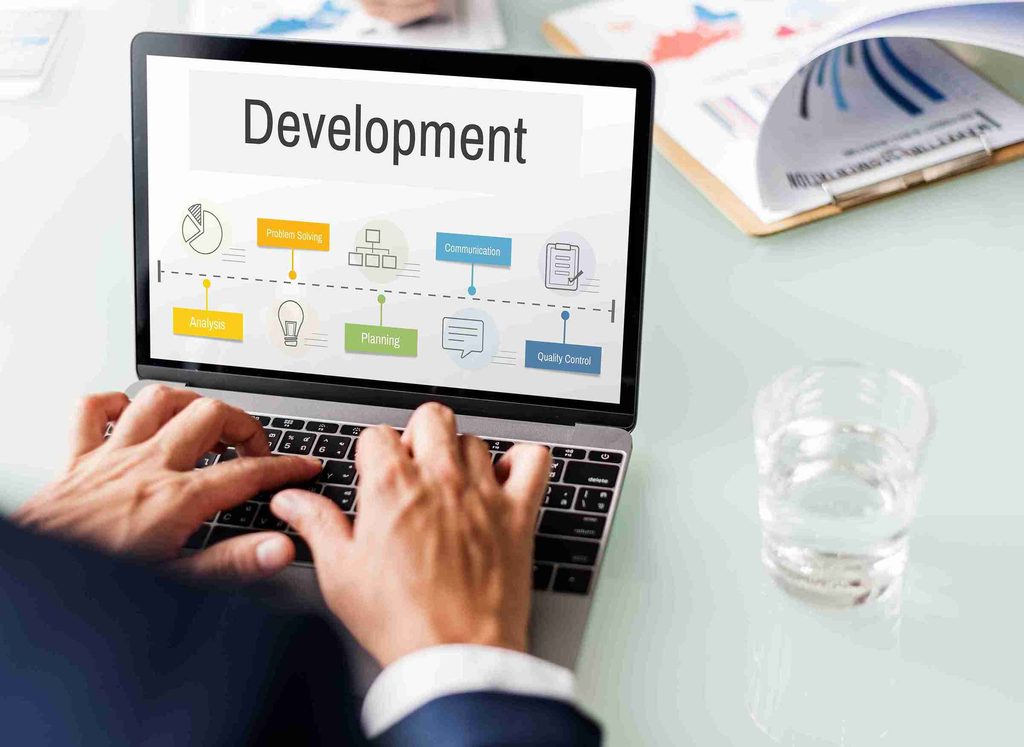
The biggest story in software development is the rise of AI coding tools. Early assistants offered autocomplete. Today’s tools work as agents: you describe a task in plain language, and the system reads your repository, proposes a plan, edits several files, runs tests, and opens a pull request for review.
Developers are spending less time on boilerplate and more time on design, review, and decision-making. A standard API endpoint, a batch of unit tests, or a small library migration can take minutes instead of hours. Junior developers ramp up faster because they can ask questions about unfamiliar code and get instant explanations.
Speed creates risk, though. Generated code can look correct while hiding subtle bugs, outdated patterns, or security flaws. The strongest teams treat AI output like work from a fast but inexperienced colleague: useful, but always reviewed.
Mature organizations build clear guardrails. They define which repositories agents can touch, require human approval before merging, and run automated security scans on every change. They track outcomes such as defect rates and cycle time rather than counting how many lines the tools produced. The skill that matters most is shifting from typing code to specifying intent clearly. Developers who can break a problem into precise, testable instructions get far better results than those who accept whatever the tool returns.
Trend 2: Platform Engineering and Developer Experience
As systems grow more complex, individual developers cannot master every tool in the stack. That is why platform engineering is one of the most important software development trends in the USA for 2026.
A platform team builds an internal developer platform: self-service tools, templates, and workflows that let product teams deploy, monitor, and scale applications without reinventing infrastructure each time. Think of it as a paved road. Developers can still go off-road when they need to, but most of the time the road is faster and safer.
Developer experience now links directly to business results. When engineers wait days for environments, struggle with unclear documentation, or fight inconsistent pipelines, delivery slows and morale drops. Expect more platform engineer and site reliability roles in US job postings, and expect standardized observability and internal portals to become normal even in mid-sized companies.
Trend 3: Cloud-Native, Edge, and Serverless Architectures Mature
Cloud adoption in the USA is no longer about moving servers to someone else’s data center. The question now is how to use cloud services efficiently, securely, and at predictable cost.
After years of rapid migration, many organizations discovered that cloud bills can spiral. In response, 2026 is the year of cloud-smart thinking. Teams adopt FinOps practices to see which services create value and which simply create expense, and some workloads return to private or hybrid setups when the economics make sense.
Edge computing is gaining ground wherever latency matters: retail systems, connected vehicles, manufacturing sensors, and healthcare devices. Instead of sending every piece of data to a distant region, applications process it close to where it is produced. This cuts delay, lowers bandwidth cost, and improves reliability when connections are weak.
Serverless and container-based designs keep growing alongside these patterns. The skill to watch is architectural judgment: knowing when a simple monolith beats a swarm of microservices.
Trend 4: Security and Digital Trust Move to the Center
Supply chain attacks, ransomware, and leaked credentials have taught American businesses that security cannot be bolted on at the end of a project.
Shift-left means moving security earlier in the development lifecycle. In practice, that includes scanning dependencies for known vulnerabilities, checking infrastructure code for misconfiguration, and reviewing threat models during design rather than after launch. DevSecOps, once a buzzword, is now a standard expectation.
Customers and regulators also ask for a software bill of materials, a list of every component inside an application. Teams that can produce it quickly gain an edge in sales cycles, especially in government and regulated industries.
State privacy laws continue to expand, and AI governance is becoming a real operational topic. Organizations want to know what data trains their models, how decisions are explained, and who is accountable when something goes wrong. Digital trust is turning into a competitive feature rather than a compliance burden.
Trend 5: Language and Framework Choices Keep Evolving
Programming language trends move slowly, but a few patterns are clear. TypeScript is the default for serious front-end and full-stack work. Python dominates data science, automation, and AI development. Rust attracts performance-critical and security-sensitive projects thanks to memory safety. Go stays popular for cloud services and developer tooling. Java and C# still power a huge share of enterprise systems in finance, insurance, healthcare, and government.
The practical lesson: choose tools that fit the problem and the team, not the loudest trend online. A language your team knows deeply usually beats a trendier one nobody has mastered.
Trend 6: Low-Code, No-Code, and Citizen Developers
Low-code and no-code platforms let analysts, marketers, and operations managers build internal tools without waiting months for engineering capacity. AI has accelerated this further, since many platforms now turn a plain-language description into a working prototype in minutes.
For professional developers, this shifts focus rather than threatens jobs. Business teams handle simple tools while engineers concentrate on complex integrations, scalability, and security. The risk is shadow IT, applications built without oversight that quietly store sensitive data. Smart organizations set governance rules, offer approved platforms, and review anything that touches customer information.
Trend 7: Emerging Technology Topics Worth Watching
Several broader technology topics are beginning to influence software roadmaps in the USA.
Quantum computing is still early, but teams in finance, logistics, and materials science are experimenting and preparing for post-quantum cryptography. Robotics and automation are growing in warehouses, hospitals, and factories, creating demand for developers who understand real-time systems, computer vision, and sensor integration. Better connectivity, including wider 5G and satellite internet, makes mobile and remote applications easier to build. Sustainable computing is also becoming a design consideration, with companies tracking the energy use of their software and favoring efficient code.
None of these will transform every team overnight. But curiosity about adjacent fields prepares you for the moment one of them suddenly becomes relevant to your project.
Trend 8: Hiring, Skills, and the US Talent Market
The job market has become more selective. Companies hire carefully, favoring candidates who show real impact over long lists of technologies. Fundamentals still matter: data structures, system design, debugging, and clear communication. Employers also look for experience with AI-assisted workflows, cloud architecture, and security awareness.
Soft skills are rising in importance. When AI drafts the first version of code, the differentiator is judgment: asking the right questions, understanding customer needs, and explaining trade-offs to non-technical stakeholders. Remote and hybrid work remain common, so strong writing and asynchronous collaboration have become quiet superpowers. Finally, continuous learning is now part of the job description. Engineers who regularly experiment with new tools and read postmortems adapt more smoothly than those who wait for formal training.
How to Prepare Your Team for 2026 and Beyond
- Start small with AI. Pilot assistants on low-risk projects and expand with clear review rules.
- Invest in developer experience. Audit build times, onboarding, and deployment, then fix the biggest frustrations first.
- Make security routine. Automate scanning and keep an inventory of dependencies.
- Control cloud costs. Review spending monthly and remove idle resources.
- Protect learning time. Give engineers space to explore new tools thoughtfully.
- Keep the user in focus. Technology matters only if it solves real customer problems.
Many teams stumble in predictable ways: adopting AI tools without training, rewriting stable systems in a fashionable language for no clear benefit, or ignoring security until an incident forces action. Choose two or three priorities each year, align them with business goals, and measure progress honestly.
Frequently Asked Questions
What are the biggest software development trends in the USA in 2026?
The biggest trends are AI-assisted and agentic coding, platform engineering, cloud-smart and edge architectures, stronger security and digital trust, and the growth of low-code tools.
Will AI replace software developers in 2026?
No. AI handles repetitive work like boilerplate and test generation, but developers are still needed for system design, code review, security decisions, and understanding customer needs.
Which programming languages are most in demand in the USA?
TypeScript, Python, Go, Rust, Java, and C# lead hiring demand. The best choice depends on whether you work in web, data, cloud, or enterprise systems.
What is platform engineering, and why does it matter?
Platform engineering means building internal tools and workflows that let developers deploy and monitor applications without setting up infrastructure each time. It reduces friction and speeds up delivery.
How can small teams keep up with these trends?
Pick two or three priorities that match your business goals, pilot new tools on low-risk projects, and measure results before expanding.
Final Thoughts
The software development trends shaping 2026 in the USA point in one direction: smarter tools, stronger security, efficient infrastructure, and greater emphasis on human judgment. AI speeds up how code is written, but it does not replace good architecture, careful review, and a deep understanding of users.
Choose a few high-impact changes, review your processes, and build the habits that keep your team competitive well beyond 2026.
Pingback: Data Loss Prevention: A Practical Guide to Protect Your Data