
Biotechnology and Life: How Ancient Technology Still Shapes Modern Science in 2026
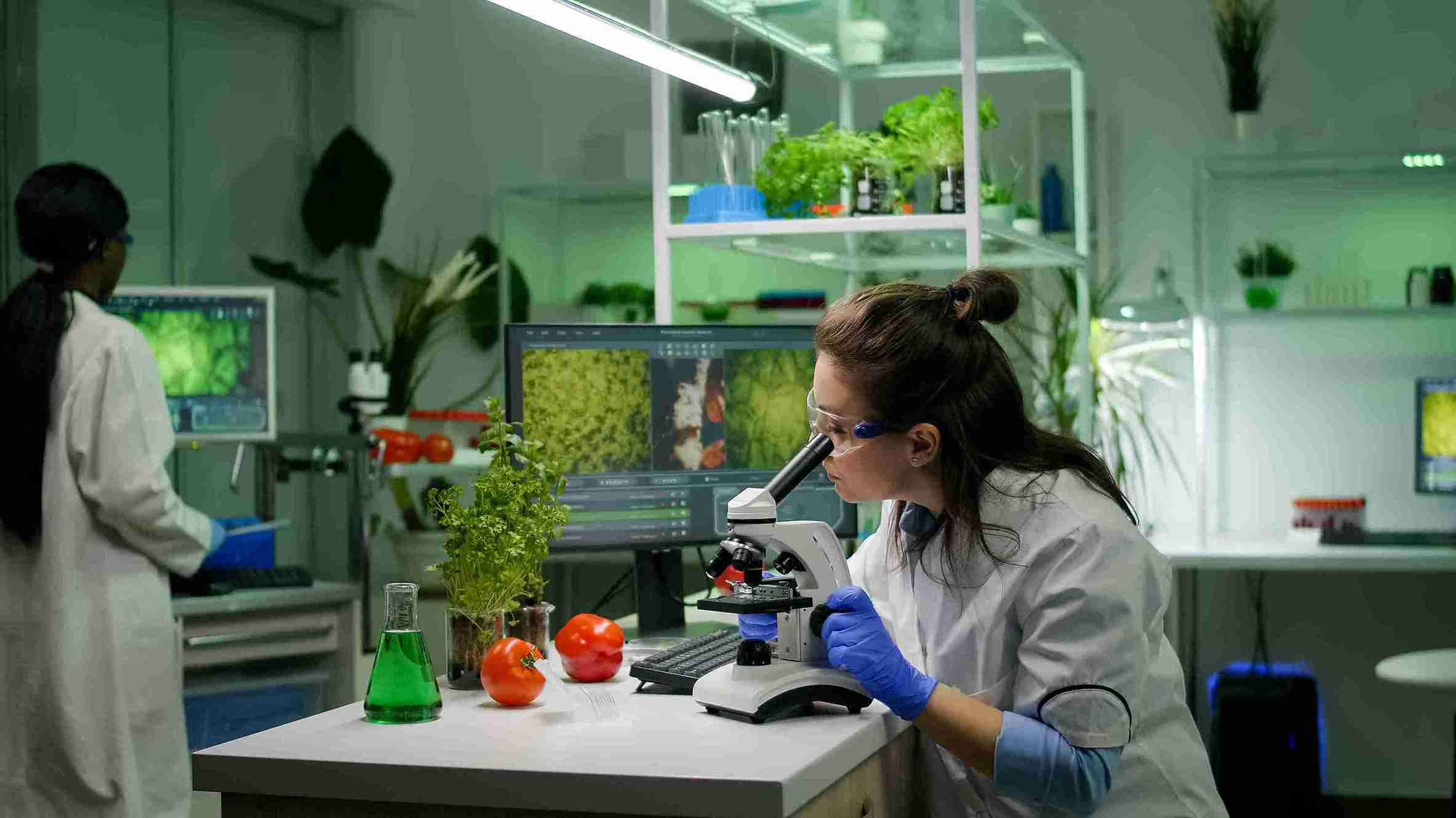
Biotechnology feels like a brand-new frontier — gene editing, lab-grown organs, AI-designed proteins. But the story of biotechnology life doesn’t start in a Silicon Valley lab. It starts thousands of years ago, when humans first learned to bend living systems to their will. Bread, beer, cheese, and selectively bred crops were all early biotech experiments, long before anyone had a word for the science behind them.
In 2026, as the United States pours billions into synthetic biology, precision medicine, and biomanufacturing, it’s worth pausing to ask: what does ancient technology teach us about where biotech is heading next? This article traces that arc — from fermenting grain in clay pots to editing genomes with CRISPR — and explores how the deep history of human ingenuity still echoes through today’s most advanced laboratories.
What Is Biotechnology, Really?
At its core, biotechnology is the use of living organisms or biological systems to create products and solve problems. That definition is broad enough to include everything from a Bronze Age brewer coaxing yeast into fermenting barley to a 2026 biotech startup engineering bacteria to produce sustainable jet fuel.
Modern biotechnology touches nearly every part of American life: the insulin diabetics inject, the enzymes in laundry detergent, the vaccines that keep hospitals from overflowing, and the lab-grown meat now appearing on menus in states like California and Texas. The industry isn’t a single sector — it’s a web of overlapping fields, including agricultural biotech, industrial biotech, medical biotech, and environmental biotech, all working together to redefine what “life science” means.
What ties all of this together is a simple truth: biology is technology. Living cells are tiny machines, and humans have been reprogramming them, knowingly or not, since the dawn of agriculture.
Tracing Biotechnology Back to Ancient Technology
Long before anyone used the word “biotechnology,” ancient civilizations were already practicing it. This is where the story of ancient technology becomes essential to understanding biotech’s roots.
Fermentation: The First Biotech Industry
Roughly 6,000 years ago, Sumerians and Egyptians were fermenting grains into beer and bread, unknowingly harnessing yeast as a biological tool. Fermentation is arguably humanity’s oldest biotechnology, and it still underpins massive modern industries — from pharmaceutical production to plant-based protein manufacturing.
Selective Breeding and Early Genetics
Farmers in ancient China, Mesopotamia, and the Americas selectively bred crops and livestock for desirable traits centuries before Gregor Mendel formalized the science of genetics. Corn as we know it today barely resembles its wild ancestor, teosinte — a transformation achieved entirely through generations of human-guided selection.
Medicine Rooted in Biology
Ancient Egyptian physicians used molds and plant extracts with antibacterial properties, echoing what Alexander Fleming would later formalize as penicillin. Traditional Chinese and Ayurvedic medicine systems similarly relied on biological compounds extracted from nature, forming an early, informal pharmacology.
These examples show that biotechnology isn’t a 21st-century invention — it’s a refinement of instincts and practices developed over millennia of trial, error, and observation.
Who Is the Inventor of Technology? A Question Without a Single Answer
People often search for a single name to credit — who is the inventor of technology — but technology, biological or mechanical, was never invented by one person. It emerged gradually, through countless unnamed innovators: the farmer who noticed a hardier wheat stalk, the potter who discovered fire-hardened clay, the healer who observed that certain molds fought infection.
Technology, in this sense, is a collective human inheritance. Even today’s most celebrated biotech breakthroughs — CRISPR gene editing, mRNA vaccines, synthetic biology platforms — stand on the shoulders of thousands of researchers building incrementally on each other’s work. The myth of the lone genius inventor rarely holds up; innovation is almost always cumulative.
From Hard Technology to Living Systems
In venture capital and engineering circles, the term hard technology describes deep, capital-intensive innovation — semiconductors, aerospace, advanced materials, and biotechnology itself. Unlike software, hard tech requires years of R&D, significant infrastructure, and often physical laboratories rather than just code.
Biotechnology sits firmly in this category. Building a gene therapy, engineering a new vaccine platform, or designing a synthetic organism takes years of iterative lab work, regulatory review, and capital investment. In the U.S., hard tech investment has surged through 2025 and into 2026, with venture funds specifically targeting biomanufacturing, agricultural biotech, and biosecurity infrastructure as national priorities.
This shift matters because it signals a broader recognition: biology is no longer a “soft science” side note in tech investment. It’s considered core hard technology, on par with chips and rockets, because the ability to engineer living systems has become a matter of economic and even national security.
The Renaissance Bridge: Renaissance Science and Technology
If ancient civilizations planted the seeds of biotechnology, the Renaissance is where scientific method took root. Renaissance science and technology transformed biology from folk practice into structured inquiry.
Figures like Leonardo da Vinci dissected human cadavers to understand anatomy with unprecedented precision. Andreas Vesalius corrected centuries of anatomical misconceptions through direct observation. The invention of the microscope in the late 1500s, refined further in the 1600s by Antonie van Leeuwenhoek, opened an entirely new universe — literally showing scientists, for the first time, that life existed on a microscopic scale.
This period matters enormously to the biotech story because it introduced the idea that biological systems could be studied systematically, tested, and understood through observation and experimentation rather than tradition alone. Without the Renaissance shift toward empirical science, the leap to modern genetics, microbiology, and biotechnology simply wouldn’t have been possible.
Precision and Calibration: The Tuner Technology Parallel
It might seem unusual to connect tuner technology to biology, but the underlying principle applies surprisingly well. Tuning — in music, radio, or mechanical instruments — is about achieving precise calibration, adjusting a system until it performs exactly as intended.
Modern biotechnology is, in many ways, a science of biological tuning. Gene editing tools like CRISPR-Cas9 allow scientists to make extraordinarily precise adjustments to DNA sequences, much like a technician fine-tuning a signal. Synthetic biologists “tune” metabolic pathways in engineered bacteria to optimize the production of biofuels, pharmaceuticals, or sustainable materials. Even personalized medicine, a defining trend of 2026, is essentially about tuning treatment to an individual’s unique genetic and biological profile rather than applying a one-size-fits-all approach.
This idea of precision calibration — perfected first in mechanical and electronic devices — has become a defining metaphor for how biotechnology now operates at the molecular level.
Biotechnology in the USA: What 2026 Looks Like
The United States remains the global epicenter of biotech innovation, and 2026 is shaping up to be a pivotal year for the industry.
Gene and cell therapies continue to expand beyond rare diseases into more common conditions, with the FDA approving a growing pipeline of personalized treatments. AI-driven drug discovery has matured significantly, with machine learning models now routinely used to predict protein structures and accelerate clinical trial design, dramatically cutting the time and cost of bringing new therapies to market.
Biomanufacturing is also becoming a national priority. Following supply chain disruptions in previous years, the U.S. has invested heavily in domestic production of biologics, vaccines, and critical pharmaceutical ingredients, reducing reliance on overseas manufacturing.
Agricultural biotechnology is tackling climate resilience head-on, with drought-resistant and disease-resistant crops entering wider use across American farmland. Meanwhile, synthetic biology startups are scaling up production of lab-grown proteins, sustainable materials, and even biodegradable plastics designed to replace petroleum-based products.
Regulation is evolving alongside innovation. U.S. agencies are working to modernize approval pathways for gene therapies and synthetic biology products, aiming to balance safety with the need to keep pace with rapid scientific progress. States like Massachusetts, California, and North Carolina continue to serve as biotech innovation hubs, drawing talent, research funding, and startup activity.
Workforce development has also become a major talking point in 2026. Universities across the country are expanding bioengineering and synthetic biology programs to meet demand, while community colleges in biotech-heavy states are launching certificate programs to train lab technicians for the growing biomanufacturing sector. Industry groups have flagged a persistent skills gap, noting that the pace of hiring in gene therapy and cell manufacturing has outstripped the supply of qualified technicians, prompting new public-private training partnerships.
Investment patterns tell a similar story of momentum tempered by caution. After a slower funding environment in prior years, venture capital directed toward biotech has picked back up, though investors are increasingly selective, favoring companies with clear paths to clinical or commercial milestones over early-stage speculative science. Mergers and acquisitions activity among mid-sized biotech firms has also picked up, as larger pharmaceutical companies look to bolt on promising gene therapy and AI-drug-discovery pipelines rather than build them internally.
Biosecurity has become an increasingly visible thread running through U.S. biotech policy as well. As synthetic biology tools become more powerful and more accessible, federal agencies are working alongside industry to establish safeguards around gene synthesis screening and biosafety protocols, aiming to prevent misuse while still allowing legitimate research to move quickly.
Everyday Life Touched by Biotechnology
It’s easy to think of biotechnology as something confined to research hospitals and pharmaceutical labs, but its footprint in ordinary American life is much larger than that. The fabric in performance clothing, the enzymes that make stonewashed jeans possible, the plant-based burgers on grocery store shelves, and the biodegradable packaging replacing single-use plastics all trace back to biotech innovation. Even skincare and cosmetics companies now routinely use fermentation-derived ingredients, a direct descendant of the same fermentation science ancient brewers stumbled upon thousands of years ago.
Agricultural biotechnology shapes the American food supply in ways most consumers never notice. Disease-resistant seed varieties, biological pest controls that reduce reliance on chemical pesticides, and soil microbiome treatments designed to improve crop yields are quietly becoming standard practice on farms across the Midwest and beyond. This is the modern extension of the selective breeding ancient farmers practiced by instinct — now guided by genomic data instead of generational trial and error.
Why Ancient Wisdom Still Matters in a High-Tech Future
It would be easy to assume that ancient techniques are irrelevant next to gene-editing tools and AI-powered drug discovery. But the opposite is often true. Researchers today still study traditional fermentation methods to discover novel probiotic strains. Pharmaceutical companies screen plant compounds used in traditional medicine for new drug candidates. Agricultural scientists study heirloom crop varieties, preserved through centuries of traditional farming, to find genetic traits that might help modern crops survive climate change.
This isn’t nostalgia — it’s practical science. Ancient technology represents thousands of years of accumulated biological experimentation, much of it undocumented in formal scientific literature but preserved through generations of practice. Modern biotech increasingly recognizes that this deep well of traditional knowledge holds genuine scientific value.
The Throughline: From Clay Pots to CRISPR
What connects a Sumerian brewer to a 2026 gene-editing lab isn’t really technology in the narrow sense — it’s the human impulse to understand and improve life itself. Every era has approached this goal with the tools available to it: fermentation vessels and selective breeding in ancient times, microscopes and anatomical study during the Renaissance, and now genome sequencers and AI models capable of designing proteins from scratch.
Biotechnology life, in other words, isn’t just about science — it’s about a continuous human story of observation, experimentation, and refinement. The precision of tuner technology, the ambition of hard technology investment, the empirical rigor born from Renaissance science, and the quiet ingenuity of ancient technology all feed into the biotech landscape we see in the United States today.
Frequently Asked Questions
What is the connection between ancient technology and modern biotechnology?
Ancient practices like fermentation, selective breeding, and herbal medicine were early, informal forms of biotechnology. Modern science has formalized and scaled these same biological principles using genetic tools and lab-based methods.
Is biotechnology considered hard technology?
Yes. Biotechnology requires significant R&D investment, specialized infrastructure, and years of iterative development, placing it firmly within the hard technology category alongside semiconductors and aerospace engineering.
How did Renaissance science influence biotechnology?
The Renaissance introduced systematic observation and experimentation to biology, including anatomical study and microscopy, laying the groundwork for the scientific methods that modern biotech relies on today.
Who actually invented technology?
There is no single inventor of technology. It developed gradually through the contributions of countless individuals across different cultures and eras, each building on the discoveries of those before them.
Conclusion
As 2026 unfolds, biotechnology is positioned to become even more deeply woven into daily American life — through personalized medicine, sustainable manufacturing, and food systems built to withstand a changing climate. Understanding where this science came from makes it easier to appreciate where it’s going. The inventors of today’s breakthroughs are standing on a foundation laid by nameless innovators across thousands of years, proof that the future of biotechnology is, in many ways, still being written by the past.
The next chapter belongs to the researchers, farmers, and founders still asking what ancient civilizations once did: how can we make life work better? Keep exploring the innovations shaping U.S. biotech in 2026 — the story is far from finished.