AI Integration for Streamlining Processes: A Complete Guide to Smarter Operations
Running a company is never easy. Every day, managers and employees engage in a countless struggle with paperwork, emails, and other routine activities that seem to waste huge amounts of time. People have to do the same boring things over and over again and make mistakes nevertheless. Does it sound familiar to you? Then you definitely need AI integration for streamlining process improvement.
To put it another way, Ai integration for streamlining process improvement using AI solutions means introducing artificial intelligence to automate various business processes in order to optimize them. By delegating the monotonous work to machines, companies are able to make their employees’ lives easier, giving them an opportunity to focus on less routine and more creative tasks that require human intervention.
Many companies, both big and small, are integrating AI into their operations to streamline and optimize them. While, from a superficial look, it might seem that all they are doing is introducing chatbots to communicate with customers or using algorithms to perform some calculations for them, there is actually much more to it.
Namely, the thing that ultimately makes the difference and brings real benefits to businesses that rely on artificial intelligence is continuous improvement. In fact, it is the key to success with AI-driven process improvement solutions.
It implies that programs do not stop at achieving only one optimization level but rather continue evolving and improving as long as they are used. In other words, the more companies employ artificial intelligence, the better results they get.
This article aims to explain what AI-integrated process improvement actually involves, why companies are choosing to rely on it, and how it helps them optimize their operations, along with numerous benefits, challenges, and even some simple guidelines for those who want to try it out.
What Is AI Integration for Process Improvement?
AI integration for process improvement refers to the inclusion of artificial intelligence in the existing process or system in order to enhance it. It is important to understand that the objective of AI integration is not to replace human resources but to make their jobs easier by introducing smart tools in the workplace.
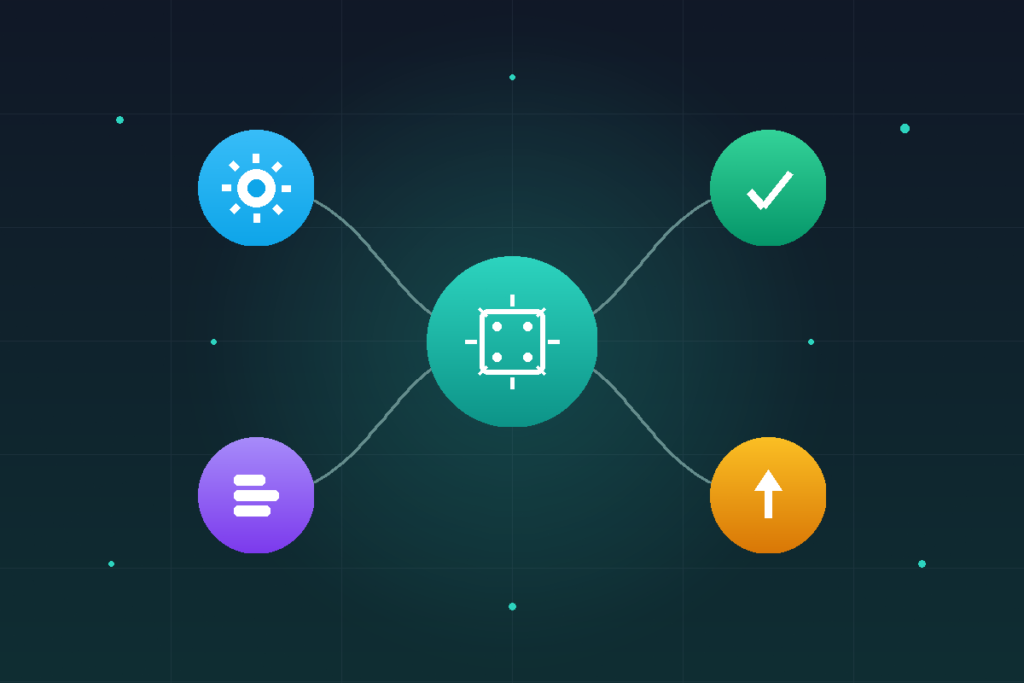
Sometimes it can be difficult to distinguish between AI and basic automation processes. The latter refers to the use of certain tools that follow specific rules for performing a particular set of tasks. In contrast, AI processes involve gaining insight from the information received and acting upon it accordingly. Thus, the main difference between the two lies in the fact that AI is much smarter than regular automation. This technology allows companies to improve the existing processes gradually instead of merely repeating them over and over again, thus making the working environment much more efficient than before.
There are several ways in which AI can be integrated into an existing process, but most of them involve utilizing such technologies as machine learning, natural language processing, computer vision, and predictive analytics, which enable the system to gain knowledge, communicate effectively with other systems or humans, identify products, and predict future outcomes, respectively.
Why Businesses Are Turning to AI for Process Improvement
Business today is highly competitive, and speed is a necessity. Below are reasons why many companies are choosing to adopt artificial intelligence.
Business, today, is highly expensive, and inefficiency is too costly. Companies that implement AI and new approaches to how a task is done can see a decrease in the cost of that process
Today’s customers expect quick turnaround for a solution or resolution for any issues or demands they may have. If a competitor can provide a faster turnaround than another company, the slower company has essentially lost that customer to the faster competitor. Using AI to better respond to customer demands can allow a company to respond to the needs of its customers faster than its competitors can, and thus gain an edge on the competition
There is an overwhelming amount of information for a person to process alone. AI can accomplish the task much faster than a human can, and can extract the important data much more efficiently than a human can.
Many businesses are realizing that they are in a much more competitive market than in the past. Firms that realize this and capitalize on their opportunity to use new approaches to systems and strategies will leave behind those that are too slow to adapt to the changing business world.
Inefficiency in the workplace can be enormously expensive, even if it cannot be easily measured.

Slow processes eat away at profits in a variety of ways. Processes that should take less time than they do cause employees to waste time, resulting in less time for them to make products or offer services than they otherwise would have; thus reducing the amount of what they offer for sale. Inefficiencies also lead to mistakes, which lead to further wasted time and resources. Furthermore, inefficiencies can lead to customers being frustrated with how long something takes, causing them to seek out other options, and lowering profits for the company that took too long. This is why it is so important for companies to invest in better processes. It allows them to cut out wasteful inefficiencies that, otherwise, would decrease profits. By doing this, a company can better position itself to be more competitive in the business world than its competitors, who may have failed to invest in improving their processes.
Key Benefits of AI Process Improvement

Decreased operational costs. By implementing AI for process improvement, the company can cut costs, as they will not require as much manpower to do the monotonous work.
Processes are done much faster with the help of AI. Instead of it taking days for an employee to come up with a report, the AI can generate it for them, and provide valuable insight.
Mistakes can be drastically decreased with the help of AI, both in quality of the product/service, and the likelihood of an error occurring. Humans can be tired or make judgment calls, however, AI is not prone to such conditions, and can even assist in noticing patterns.
Processes are much more easily scalable, as if the workload requires more attention, and more workers are needed, implementing AI for process improvement will lessen the total number of employees needed to fulfill the workload.
Customer satisfaction rates can skyrocket when employees can serve customers in better ways, such as responding to a customer inquiry at 2 am, or automatically fulfilling an order.
These factors all lead to one conclusion – the implementation of AI for process improvement is the best way to eliminate the tedious and error-prone elements of a job for an employee, so that they can enjoy the more enjoyable aspects of their profession.
How AI Integration Works in Practice
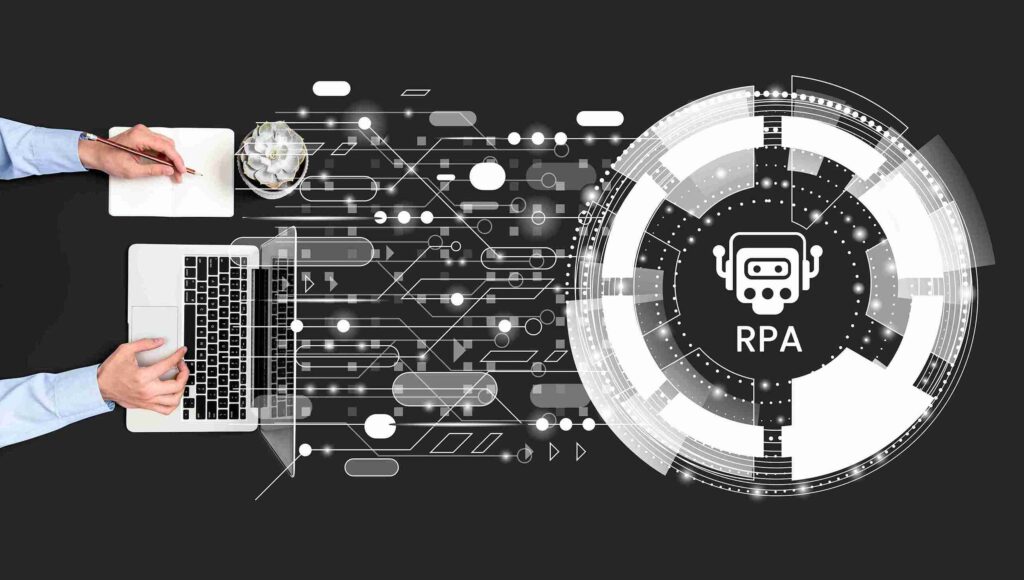
AI integration typically follows a particular process.
Process mapping and discovery of pain points. Any company that wants to adopt AI should know which processes are the most critical and where they should use artificial intelligence. Moreover, it is vital to comprehend if particular software will resolve the issue or not. First, it is essential to define the problems that the company wants to solve.
Finding the appropriate tools for the tasks. They should ideally fully resolve the issues; hence, the company should know the problems that it wants to solve and then find the corresponding solutions. For example, a chatbot will help resolve customer service issues, whereas another company may want to find the root causes of failures on the production line.
Integration. Most companies already use some integrated systems, such as ERP or CRM, hence the tools should ideally work with existing software.
Testing, tracking, and improvement. After introducing new software to the production process, it is vital to see if it works correctly and make amendments if necessary. The process of adopting AI is continuous, and thus it should not be viewed as an end point.
AI Continuous Improvement: Building a Feedback Loop
AI is not a one-time cycle; instead, it is a cyclical process in which the focus is made on the improvement of the cycle.
Such factors as
real-time data usage,
model retraining,
employee feedback,
and
key performance indicators (KPIs)
allow the organization to consider AI as a continuous process, thus making the most of its usage.
First, in terms of real-time data usage, the current system performance is evaluated based on speed, accuracy, and tasks performed.
Second, since customers’ behaviors are continuously changing, the system has to be retrained in order to adapt to the new conditions and perform optimally.
Third, regarding employee feedback, since it is the employees who work with the system, they are the ones to provide input on its Ins and Outs.
Fourth, as for KPIs, they allow measuring the system’s impact on the business performance, thus helping understand what it brings to the organization.
These are the reasons why such factors as real-time data usage, model retraining, employee feedback, and key performance indicators are integral to the ongoing process of using AI. They form a positive feedback loop, which demonstrates the advantages of a cyclical approach.
Real-World Use Cases of AI Process Improvement
Manufacturing: AI can be applied to predict equipment breakdowns through what is known as “predictive maintenance,” thus allowing one to stop a malfunction before it occurs. Another area in manufacturing where AI can be applied is quality control, as AI can inspect products for defects faster and more accurately than humans.
Customer service: chat-bots can be used to answer the most frequent questions asked in real-time. Moreover, AI can be used to sort and prioritize tickets and analyze the content of the message to determine the emotional state of the client.
Finance: in finance, AI can be used to spot fraudulent transactions by analyzing thousands of relevant cases and picking out outliers. Processing invoices with the help of AI simplifies the process reduces errors in the processing.
HR and recruitment: AI can be used to scan hundreds of CVs for relevant information needed for short-listing candidates who fit the recruiter’s criteria. This will save the HR department a lot of time spent on sifting through resumes. Another application of AI in HR is training new employees during the onboarding process.
Supply chain: AI can analyze data on past sales to predict future demand and avoid shortages or surpluses so that supply chains can remain efficient. It can also be used in inventory management, as it can evaluate what stock of a certain product to keep at a certain warehouse.
All the above areas have one thing in common: they utilize AI to optimize business processes. One may think that these are the domains of big tech companies, but AI can be used to automate and optimize processes in any company.
.
Challenges and Considerations in AI Integration
Discussion of the Main Challenges to Integrating AI in Businesses Essay
There are several main challenges to integrating AI in business, including data quality/data readiness, employee resistance/change management, integration with legacy systems, cost versus return on investment (ROI), timeline for ROI, ethical and compliance issues, among others. First, AI is highly dependent on the amount and quality of data used to train it. Therefore, businesses need to have clean and reliable data for successful implementation of AI.
Second, many employees fear that AI will take away their jobs, and as such, there is always likely to be employee resistance to the integration of AI in a business. However, this concern can be alleviated by ensuring that employees understand that the aim of AI is to make their work easier, not to replace them. Change management practices need also to be deployed to facilitate this process.
Third, many businesses operate using legacy systems, which may be incompatible with AI systems/software, thereby making implementation difficult. Fourth, AI requires a significant amount of investment in terms of cost. Some businesses, therefore, may struggle to implement AI due to high costs. Furthermore, while some businesses may see a short-term gain after implementing AI, others may have to wait a long time for a return on investment. Lastly, ethical and compliance issues should also be considered when implementing AI, especially when dealing with sensitive information, as there are many privacy laws in place that could be violated if AI is not implemented responsibly.
Best Practices for Successful AI Integration
Future Outlook: Where AI Process Improvement is headed
Agentic AI: self-managing systems
The future of the AI process improvement is expected to involve agentic AI, or systems that manage entire processes with limited human interaction.
IoT convergence: smart automation
In terms of process improvement, future developments are likely to see an increased use of AI in combination with the IoT (Internet of Things) to allow for greater degrees of automation.
Democratization of AI technologies: process improvement for all
A democratization of AI powered technologies is anticipated, allowing for not only large enterprises to utilize process improvement techniques. This will allow smaller firms and players to enter the market and compete on a larger scale.
Frequently Asked Questions
What do you understand by AI integration in the context of process improvement?
It refers to the use of artificial intelligence to drive process improvement.
How is it different from automation?
The former requires the use of a certain level of intelligence to achieve its objectives, while the latter works on pre-set programs.
What industries are currently using the technology to improve their processes?
Some of the industries that have adopted the use of AI include manufacturing, customer service, finance, human resources, and supply chain among others.
How long does it take for the investment to start bearing fruits?
It depends on the complexity of the process being addressed.
Is it possible for small-scale businesses to adopt the technology?
Yes, because the technology is available and can be adjusted to suit different levels of business operations.
Conclusion
AI integration, as a concept, has become a necessity rather than a luxury for most companies that strive to remain competitive within their respective spheres. From cutting production costs to offering better customer experiences, its advantages are difficult to overlook.
However, effective AI integration requires planning and a commitment to continuous improvement on the part of the management. In essence, it is a process that only benefits businesses that view it as an ongoing endeavor rather than a one-time occurrence.Whether you are new to the concept or have already begun your explorations, the most important thing is to start small, be patient, and continue learning. If your business is due for an upgrade, it may be a good idea to invest some time and effort into researching the most appropriate tools and methods.